
Our 4 step process
What happens when you come in.
Step 01
Assess
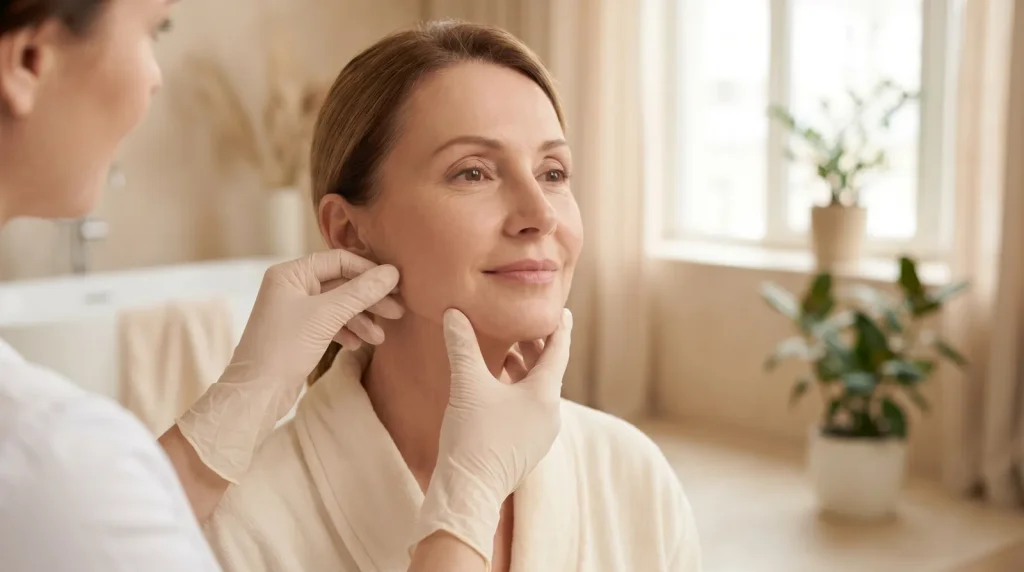
Your first visit starts with a conversation, not a treatment. We listen carefully to your concerns and goals, then examine your face in context — expression, movement, structure, and skin quality, all considered together. It’s how we understand your face as it actually is, not just how it looks in a single moment.
We document your starting point with standardised, repeatable photos — the foundation every future measurement is compared against.
Step 02
Measure
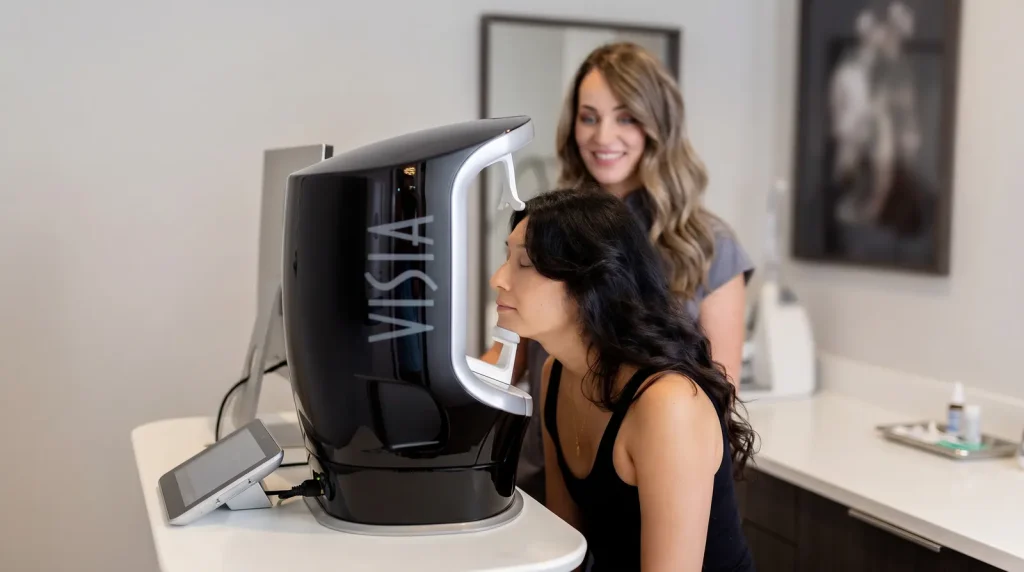
This is where assumption ends. We capture your face in three dimensions, quantify its current state, and create a clinical baseline — an objective, measurable record of where your skin is today. It’s the foundation that makes every future change visible. Without a baseline, progress is a guess. With one, it’s evidence.
Step 03
Treat
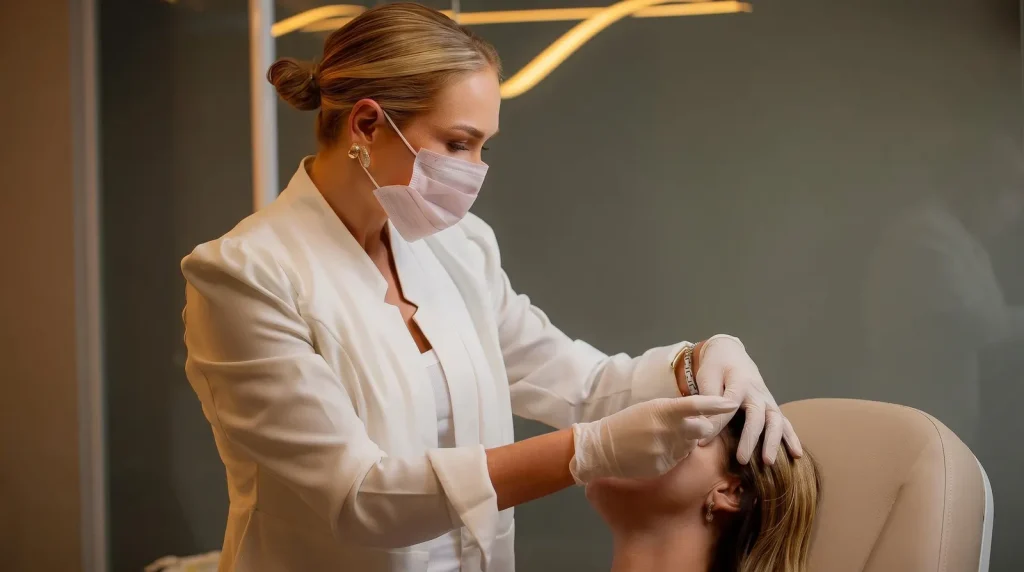
With a clear baseline, treatment becomes a considered decision — not a default. We work in a deliberate order: skin quality first, laxity second, volume last, and only where it’s truly needed.
Every recommendation is individual, conservative, and chosen for long-term skin health over short-term change. The measurements made earlier guide every choice — what to treat, how much, and what to leave alone.
Step 04
Refine
Faces change, and so should treatment plans. We review your results against your original baseline, see exactly what’s working, and adjust thoughtfully over time. It’s the step that makes measurement worth doing.
Subtle, staged change produces the most natural, lasting outcomes — and re-measuring is what tells us, honestly, whether we’re on track.


A closer look.
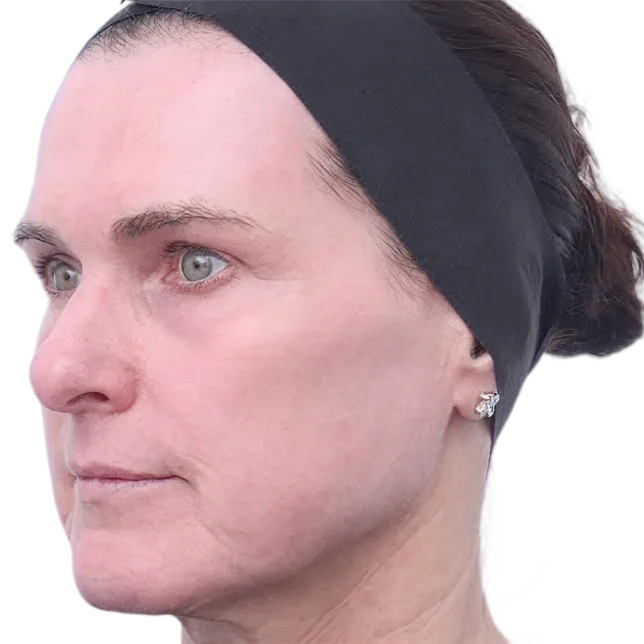
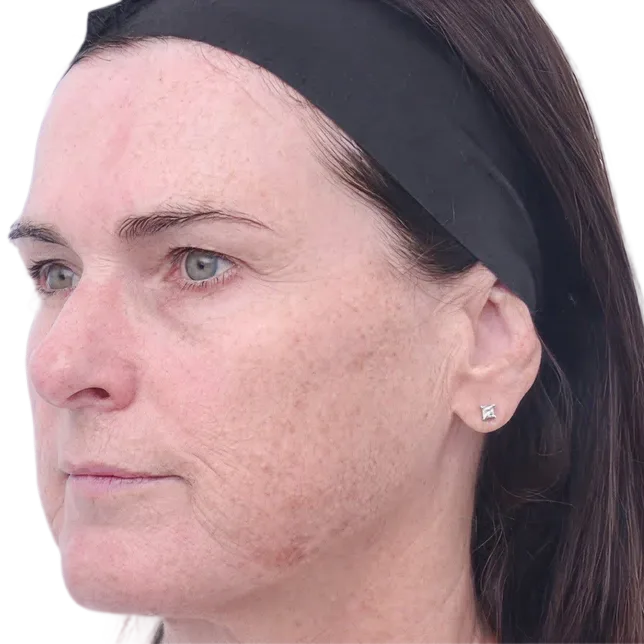
Skin Laxity · 18 months between images
A patient in her early 50s presented with concerns about laxity through the mid and lower face. Baseline 3D imaging documented the starting contour and lift across the jawline.
Following our usual order — skin quality first, then addressing structural support — treatment was staged across 18 months and reviewed at intervals using the same imaging tools.
Follow-up 3D imaging recorded measurable lift across the lower face and a more defined jawline, achieved through gradual, conservative treatment rather than a single intervention.
What makes your testing different from a standard skin consultation?
Most skin consultations rely on visual assessment alone. We use clinical tools including Visia skin analysis, 3D imaging, and standardised photography to create an objective, measurable baseline of your skin. That means our recommendations are based on what we can document and measure, not just what we can see in the moment.
Are the tests invasive?
No. Our assessment tools are completely non-invasive. Visia analysis and clinical photography involve positioning your face in front of an imaging device, nothing touches your skin. 3D imaging captures your face using light and cameras. There’s no discomfort involved.
Can I start treatment without doing the tests?
We strongly recommend completing the assessment process before starting any treatment. The baseline it creates is what allows us to track your progress accurately and make evidence-based decisions about your care. Without it, we’re working without a reference point.
Who reviews my results?
Your results are reviewed by the practitioner managing your care, whether that’s a doctor, nurse, or skin therapist. For more complex concerns, results may also be reviewed by Dr Chan or another senior clinician. Every recommendation is made within the same clinical framework.
How often do you retest?
It depends on the treatment plan. Most patients are re-measured at key intervals throughout their plan, typically before each new phase of treatment and at follow-up appointments. This allows us to track progress, confirm what’s working, and adjust the plan based on real evidence.
Can I access my results?
Yes. Your imaging and analysis results are part of your clinical record. We’re happy to walk you through your results at any appointment, and you can request access to your records at any time.
What if the tests reveal a deeper issue?
If our assessment identifies a concern that falls outside the scope of cosmetic medicine, we’ll let you know and recommend the appropriate next step, whether that’s a referral to a dermatologist, GP, or other specialist. Your health and safety always come first.
How soon will I see results?
It depends on the treatment. Some treatments produce visible change within days or weeks. Others, particularly collagen-stimulating treatments, produce gradual improvement over months. Because we measure at intervals, we can show you exactly how your skin is responding rather than relying on general estimates.