What is Tixel?
Tixel is a non-laser skin resurfacing treatment that uses precisely controlled heat, delivered through a fine titanium tip, to renew the skin’s surface and stimulate collagen production. It’s a form of fractional thermo-mechanical technology, which means it treats the skin in tiny, spaced points rather than all at once, prompting renewal while leaving surrounding skin intact.
Because it uses gentle, direct heat rather than a laser beam, recovery is milder than traditional laser resurfacing. Tixel is offered at VCI in Melbourne under doctor-led care, with the intensity matched to your skin and your goals.
How Tixel works
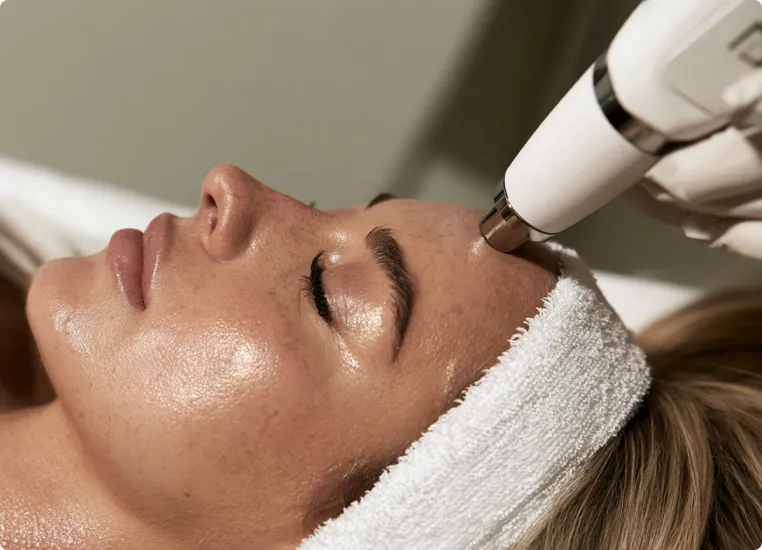
Tixel works using a heated titanium tip that touches the skin for just milliseconds at a time, in a fractional pattern. Each brief contact transfers precise thermal energy that creates microscopic channels in the skin’s surface. This controlled micro-injury triggers the skin’s natural healing response and stimulates new collagen, renewing texture and firmness from within, without needles, cutting, or laser energy.
Because it works with your skin’s own repair processes, the improvement builds gradually. A typical course is around three sessions spaced four to six weeks apart [writer to confirm cadence with VCI], with results developing across the course and in the weeks that follow.
How Tixel compares with laser resurfacing
Tixel and laser resurfacing both renew the skin, but they work differently, and each has its place. Because Tixel uses no laser beam, no protective eyewear is needed, which is why it can treat close to the lash line where lasers can’t safely reach. It also involves shorter, milder downtime.
Where CO2 laser resurfacing remains the stronger tool is for deeper resurfacing and significant sun damage. Tixel also differs from microneedling: microneedling uses fine needles to create physical channels that induce collagen, while Tixel uses controlled heat to resurface the surface and stimulate collagen, so it renews texture and tone in a way needling alone doesn’t.
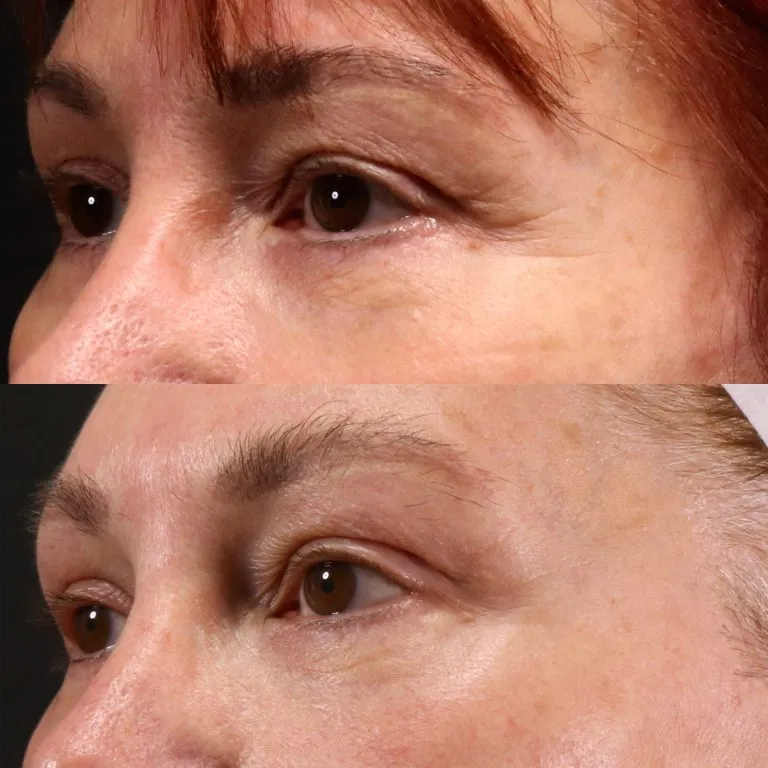
Tixel before
and after
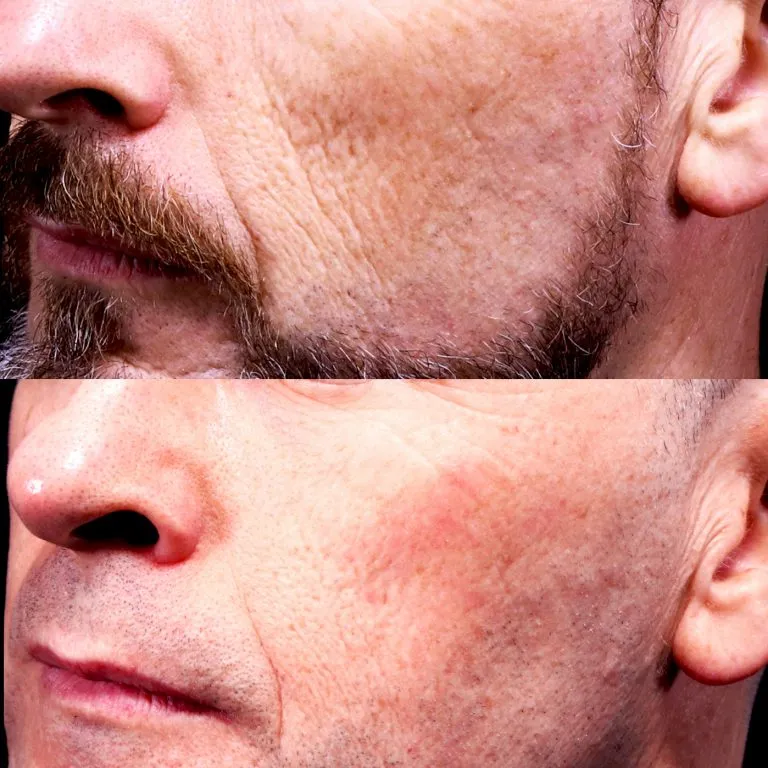
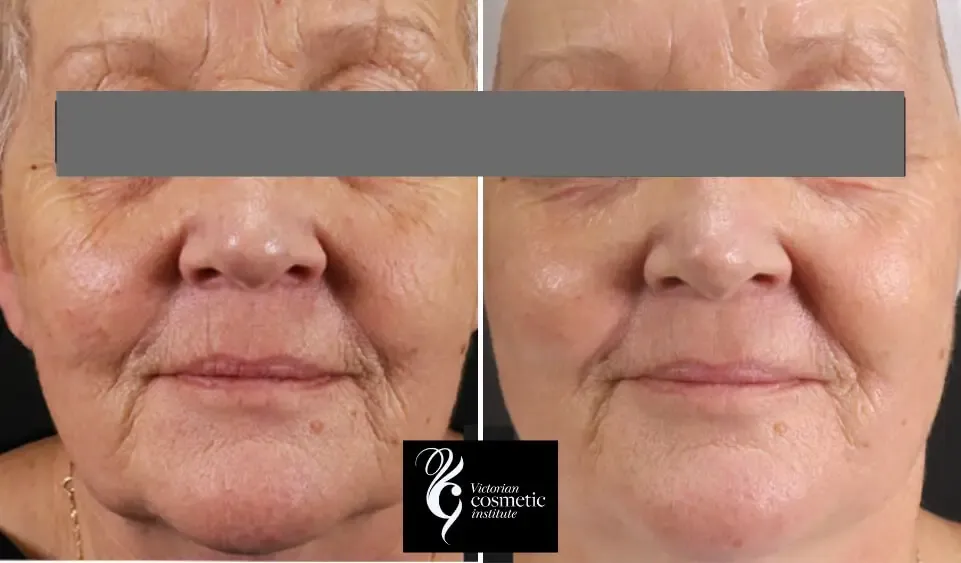
Tixel results build progressively across a course of treatment rather than appearing after a single session. As the skin renews and new collagen forms, texture looks smoother, fine lines soften, and the skin appears fresher and brighter, with improvement continuing in the weeks after each session.
The genuine results below are from VCI patients, each labelled with the number of sessions and the downtime involved, so you can see what’s realistic. Individual results vary. A consultation is required to determine treatment suitability.
*Patient consent has been obtained to display these images. Individual results vary and cannot be guaranteed. A consultation is required to determine treatment suitability.
Who is Tixel for?
Tixel suits adults looking to improve skin quality and address early-to-moderate signs of ageing across areas that are difficult to treat with laser. It is most often used on the face, eye area, and neck, either as a standalone treatment or as part of a broader skin plan.
Eyes and eyelids
Tixel is one of few skin resurfacing options that can be used safely on the upper and lower eyelids, right up to the lash line. Because the treatment is thermo-mechanical rather than light-based, no internal eye shields are needed and there is no risk of laser scatter to the eye itself. This makes it a strong option for softening crepey eyelid skin, fine lines through the crow’s feet area, and mild eyelid laxity in people not ready to consider surgery. Improvement in this delicate area typically builds over a series of three sessions.
Fine lines and skin texture
Tixel is well suited to fine perioral lines, forehead lines, and the general roughness and dullness that develops with age and sun exposure. It refines the skin’s surface and improves overall tone without the extended recovery of a fully ablative laser.
Acne scars and pigmentation
For shallow atrophic acne scarring and uneven surface pigmentation, Tixel can gradually smooth texture and even out tone across a series of treatments. It is often chosen for skin types where more aggressive laser resurfacing carries a higher pigmentation risk.
Who it’s not for
Tixel is not suitable during pregnancy or breastfeeding, on active skin infections or cold sores in the treatment area, or on skin that has recently been treated with isotretinoin (a washout period applies). Severe inflammatory acne, active eczema in the area, or a history of keloid scarring may also make Tixel unsuitable. A consultation is required to confirm whether Tixel is right for your skin.
Benefits of Tixel
- Treats right up to the lash line without internal eye shields.
- Most people are socially comfortable within about five days.
- Thermo-mechanical rather than light-based, suiting a wider range of skin types.
- The compact tip treats small features like eyelids, perioral lines, and scars.
- Improvement builds gradually across a series of sessions for a natural change.
- One device addresses fine lines, texture, mild laxity, acne scars, and pigmentation.
How it works
-
Book a consultation
Cosmetic treatments require an initial consultation, offered with no obligation to proceed, so you can make an informed decision about your options. Your doctor assesses your skin and concerns, discusses your goals, and creates a personalised Tixel plan.
-
Pre-treatment care
If preparation is required, you receive clear pre-treatment instructions to support a safe treatment and a smooth recovery.
-
Your treatment appointment
Your Tixel treatment is performed by VCI’s clinical team, with safe, evidence-based care in a comfortable, professional environment.
-
Post-treatment care
You receive specific aftercare instructions to support your recovery, and the team is available to answer any questions during this time.

What’s included in your Tixel treatment at VCI
Every Tixel treatment at VCI includes:
- A consultation with your treating doctor to assess your skin and confirm suitability
- VISIA skin imaging and baseline photography to track your progress
- A personalised treatment plan and written consent
- Topical numbing applied to the treatment area for comfort
- Your Tixel treatment, performed by VCI’s clinical team
- Written aftercare instructions and access to the team for follow-up questions
- A review appointment to assess your response and plan next steps
A full course of Tixel typically involves three sessions spaced four to six weeks apart. Additional sessions, medical-grade skincare, and any complementary treatments sit outside a single session and are discussed at your consultation.
How much does Tixel cost in Melbourne?
Tixel at VCI starts from [$X] per session, with the total cost depending on the size of the treatment area, the depth and intensity of the treatment, and whether it is booked as a single session or as part of a course.
Because Tixel is typically performed as a series of three sessions spaced four to six weeks apart, most patients budget for a full course rather than a one-off. Treating a smaller area such as the eyes or perioral region costs less than a full-face treatment, and combining Tixel with another modality changes the overall investment.
Our medical team for Tixel
VCI has been doctor-led since Dr Gavin Chan (MBBS, MED0001175745) founded the clinic in 2005. Our multidisciplinary medical team of doctors, cosmetic nurses, and skin therapists works together on every treatment plan, and Tixel is performed by clinicians trained in the device.
Because we are doctor-led, your first appointment is a medical assessment rather than a sales conversation. Your doctor examines your skin, uses VISIA imaging and other measurements to establish a baseline, and recommends whether Tixel is genuinely the right treatment for what you want to change, or whether another approach or a combination would give a better result.
This measurement-led approach means your progress is tracked objectively across your course of treatment, and adjustments are made based on what your skin is actually doing rather than assumption.

“Good cosmetic medicine starts with good information.”






Preparation and what to expect
Before
At your consultation your doctor confirms Tixel is suitable and gives specific pre-treatment instructions. In general, active skincare such as retinoids and exfoliating acids is paused for about a week beforehand, and direct sun exposure and fake tan are avoided in the days leading up to your session. If you are prone to cold sores in the treatment area, a short course of antiviral medication may be recommended in advance.
During
Topical numbing cream is applied to the treatment area around 30 to 45 minutes before your session for comfort. The Tixel handpiece is then passed over the skin in a controlled pattern, which most people describe as a warm prickling sensation. A typical treatment takes 20 to 45 minutes depending on the area, and cooling and calming products are applied at the end.
After
Your skin will feel warm and look pink for the rest of the day, similar to sunburn. Over the next three to five days you will see a fine grid pattern of small dots that darken slightly, then flake away with the skin’s natural renewal. Most people are socially comfortable within about five days, with pinkness gradually settling. Strict sun protection, gentle cleansing, and pausing active skincare for around a week support recovery, and your team gives you a full written aftercare plan.
How much does Tixel cost in Melbourne?
Tixel at VCI starts from [$X] per session. Total cost depends on the treatment area, the intensity of the treatment, and whether you book a single session or a full course of three. Your exact cost is confirmed at your consultation.
Is Tixel safe around the eyes?
Yes. Tixel is one of few skin resurfacing options that can be used safely on the upper and lower eyelids, right up to the lash line, because it uses a heated titanium tip rather than laser light. No internal eye shields are required, and there is no risk of laser scatter to the eye. Improvement in the delicate eye area typically builds over a series of three sessions.
Is Tixel better than microneedling?
Tixel and microneedling both improve skin quality, but they work differently and suit slightly different concerns. Microneedling creates fine mechanical channels that stimulate collagen, while Tixel adds controlled thermal energy through a titanium tip for deeper resurfacing and more visible change on fine wrinkling and mild laxity. Microneedling has less downtime per session, while Tixel typically produces more visible change in fewer sessions. Your doctor recommends the option that suits your skin and your goals.
What is the downtime after Tixel?
Downtime after Tixel is typically about five days. Skin looks warm and pink on the day of treatment, then develops a fine grid pattern of small dots that darken and flake away over three to five days. Most people return to work and social activities within five days, with residual pinkness settling over the following week. Strict sun protection is essential during recovery.
How many Tixel sessions do I need?
Most patients have a course of three Tixel sessions spaced four to six weeks apart. Some people benefit from additional sessions depending on the concern, and periodic maintenance treatments help preserve results over time. Your recommended course is confirmed at your consultation.
Does Tixel hurt?
Tixel is well tolerated by most people. Topical numbing cream is applied around 30 to 45 minutes before treatment, and the sensation during is usually described as warm prickling. Discomfort is short-lived, and cooling is applied at the end to settle the skin.